


Stay within Rule 701 limits before every grant
Slice checks your equity grants against the Rule 701 exemption limits on every board approval, so you know where you stand before your next grant.
get a Demo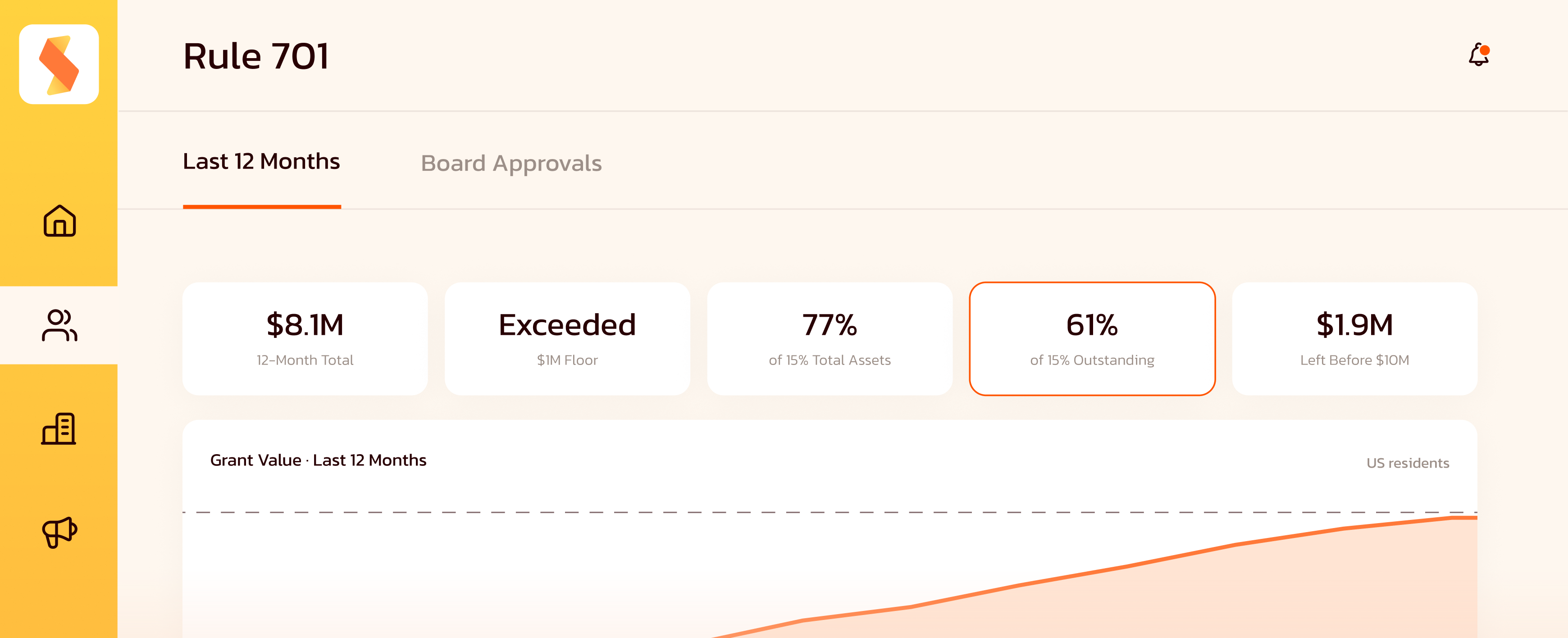


Companies grant equity without securities surprises on Slice





THREE-TEST TRACKING
See your position against all three Rule 701 limits
In any 12-month period, Rule 701 caps sales at the greatest of $1 million, 15% of total assets, or 15% of outstanding securities. Slice calculates all three on a rolling basis, counting grants to US residents, and shows which limit gives you the most room.


BOARD APPROVAL CHECKS
Check every board approval before it goes out
Slice runs the Rule 701 check on every board approval and tells you whether the exemption is intact, the $10M disclosure threshold is crossed, or the limits are exceeded. If data like total assets or a current 409A is missing, Slice tells you what to add.
$10M DISCLOSURE THRESHOLD
Track your running total toward enhanced disclosure
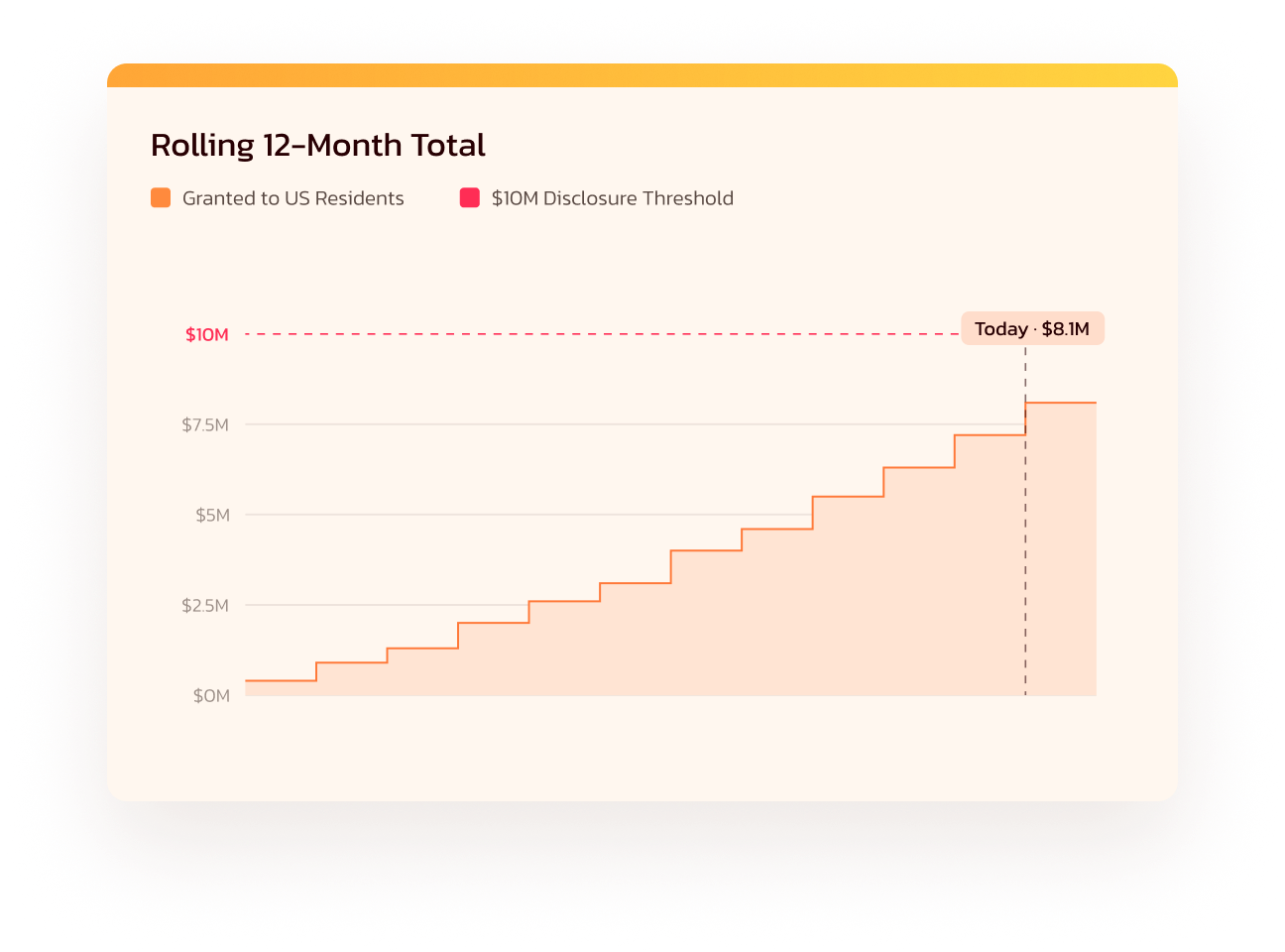
Once sales pass $10 million in a 12-month period, recipients must receive additional disclosures, including a plan summary, risk factors, and recent financial statements. Slice tracks your running total so the threshold never catches you off guard.

ACCREDITED INVESTORS & REPORTS
Track accredited investors and share your position with counsel
Stakeholders confirm their accredited investor status in the Slice stakeholder app, and Slice leaves them out of your Rule 701 count automatically. Run the US Rule 701 Report for any date, include pending grants to see the impact of your next board approval, and export the detail to Excel for your securities counsel.


OTHER FEATURES
FAQ
What is SEC Rule 701, and which companies can use it for employee equity?
Rule 701 is a US federal securities-registration exemption for eligible issuers that are not subject to Exchange Act reporting. It covers qualifying compensatory offers and sales under a written plan or compensation agreement, including awards to employees, officers and directors. Consultants and advisers may qualify if they are natural persons providing bona fide services unrelated to raising capital or promoting a market for the issuer’s securities.
How do companies calculate the Rule 701 offering limit?
For securities sold in reliance on Rule 701 during any consecutive 12-month period, the issuer must satisfy at least one of three alternative tests:
- $1 million in securities sold;
- 15% of the issuer’s total assets, using the applicable balance-sheet measurement; or
- 15% of the outstanding securities of the class offered, using the applicable balance-sheet measurement.
The tests use different measures: the third is based on securities of the relevant class, not a dollar amount. Companies should account for the awards relying on Rule 701 and apply the rule’s valuation requirements when assessing the limit.
How should multinational companies assess Rule 701 limits for US and non-US awards?
Classify the exemption for each relevant offer or sale before counting it:
- Include transactions relying on Rule 701 in the Rule 701 assessment.
- Assess whether an eligible offshore offer can instead rely on Regulation S or another available exemption; a recipient’s location alone does not establish that an exemption applies.
- Review local securities requirements separately from the US exemption.
This helps avoid treating every global award as a Rule 701 transaction or excluding an award without a basis for doing so.
How does Slice help teams review Rule 701 issues during equity approvals?
Slice’s corporate-approval compliance checks assess recorded awards, including those in the proposed approval, against Rule 701’s rolling 12-month offering limits and $10 million enhanced-disclosure threshold. A flag gives finance and legal teams an opportunity to review the underlying awards and inputs with US securities counsel; it is not a final determination that an award qualifies or that required disclosures have been delivered.
How can Slice help teams monitor Rule 701 disclosure exposure?
Slice can flag when awards assessed during a corporate approval may cross the $10 million threshold in a rolling 12-month period. Teams can use that warning to assess whether enhanced disclosures are required and ensure they are provided at the appropriate time. For options, required disclosures generally must reach recipients a reasonable time before exercise; an alert does not deliver them.


