

Global Equity Management
Best Global Equity Management Software for Multi-Country Companies Reviewed in 2026
Recording a grant for a London or Berlin hire takes one screen. Knowing whether it can be made on those terms, and what it triggers later, is where global equity platforms split, and five of them are reviewed here on how much of that legal and tax work they carry.


Take a 160-person software company that closes its Series B in Austin, hires four engineers in London and two in Berlin, and extends its US option plan to all six, recording the grants that week. Nine months later, the controller learns no one checked whether the company and London hires qualified for EMI options. Whether or not EMI was available, the UK option grants must be reported to HMRC by 6 July following the tax year in which they were made. The Berlin side carried a quieter gap: Germany generally does not tax an option at grant, but a payroll obligation can arise at exercise or transfer, and German payroll had never been told the grants existed.
The equity records were accurate throughout. What failed was the legal and tax layer around them. The best global equity management software for a multi-country company is therefore the platform that carries that layer at the moment a grant is made, which is the test applied to the five below.
Why Single-Country Equity Platforms Break When You Hire Globally
A platform designed for one country assumes one securities regime, one tax regime and one payroll, so the second country opens four gaps, beginning with whether a grant can be made at all.
- Tax Treatment Varies by Where the Employee Sits: Location is only one input, since tax timing depends on the instrument, the local regime, the employee's residence, where the work was performed and the event itself. When two countries claim parts of one award, treaties and double-tax relief generally decide how it is shared.
- No Compliance Layer Means Mistakes Surface After the Fact: Securities exemptions can turn on headcount, offer value or disclosure, while exchange controls can limit how employees pay to exercise and how proceeds come home. A missed condition can bring penalties for the company and a surprise tax bill for the employee, which can become a claim against the company. In India, for example, exchange-control filings carry their own deadlines.
- Finance, HR, and Legal Working off Separate Records: A relocation logged in HR may not reach the equity record unless the systems are connected, and a termination can shorten an exercise window before payroll hears of it. Finance then closes stock-based compensation on figures that HR and legal changed weeks earlier.
- What Most Cap Table Tools Still Do Not Handle: Grant documents can require local wording and exercise price conditions that usually cannot be repaired after the grant. Mobility can also divide an award between countries under domestic law and treaties, and many countries add reports and deadlines of their own.
Best Global Equity Management Software in 2026: TL;DR
This table lines up the five platforms by approach to multi-country equity and by the company each tends to fit.
5 Best Global Equity Management Software Platforms in 2026
The five reviews below cover Slice, Carta, Ledgy, Morgan Stanley at Work, and Qapita. Each one draws on the vendor’s own product and feature pages as they appeared in October 2026. Coverage claims, integration details, deployment timelines, and customer quotes are sourced directly from what each vendor has published, and where a page is ambiguous or silent on a point that matters for multi-country equity, that gap is noted in the review.
1. Slice: AI-Native Global Equity Management and Compliance
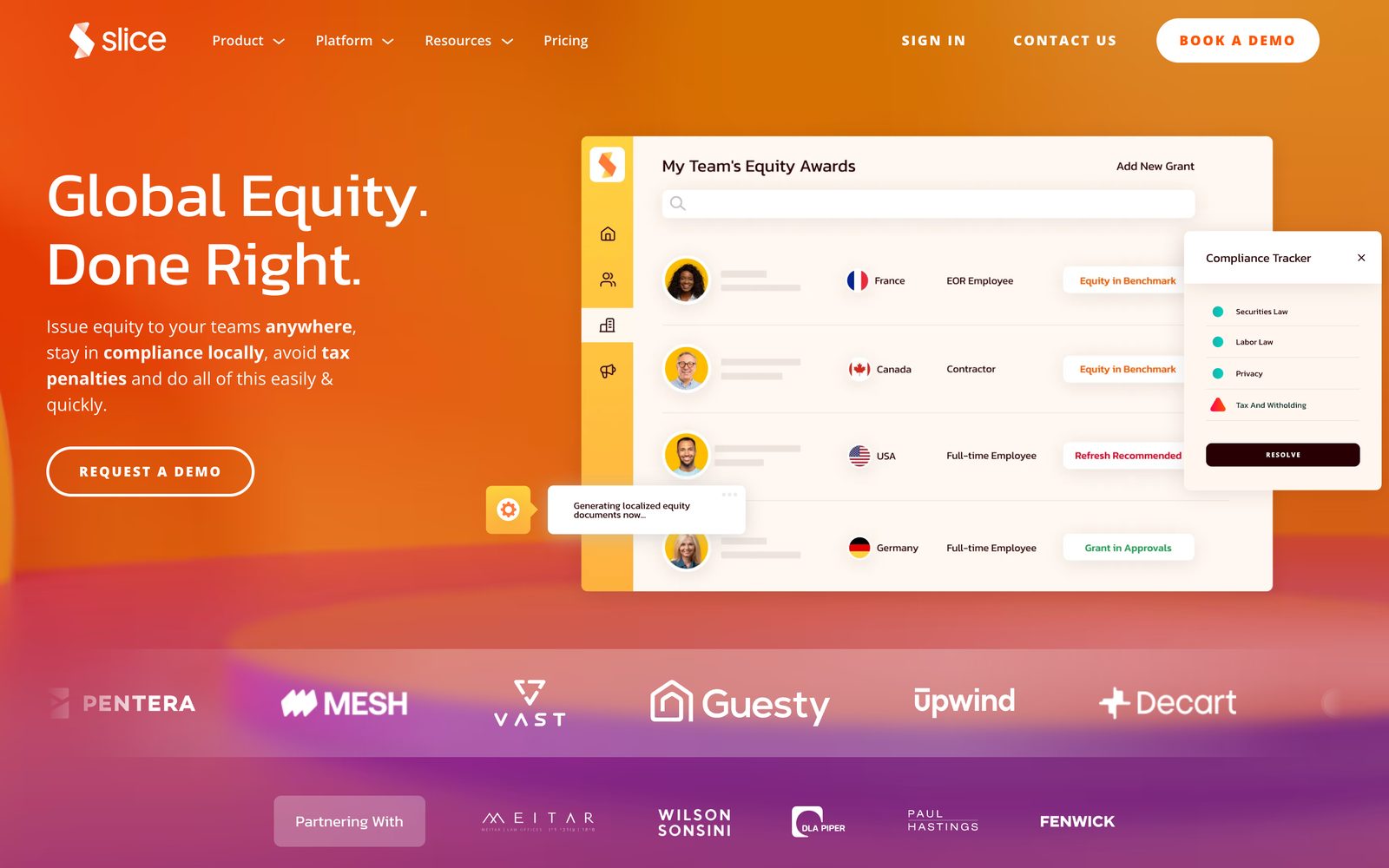
Slice is the AI-native global equity management and compliance platform, covering 67+ countries, for companies whose employees and equity holders sit in more than one country. AI and compliance are built into the workflow itself rather than bolted on afterward, and Exposure Intelligence flags risks in your equity operation so your team can fix them.
Strengths:
- Compliance Alerts Inside the Workflow: Global Compliance tracks grants, ownership, equity pools and regulatory changes and raises alerts in context. Each alert comes with an explanation and a recommended action.
- Tax Estimates That Follow the Employee: The Equity Value Simulator estimates tax for each stakeholder at each equity event. When someone relocates, it adjusts those estimates to the new tax status.
- One Record for Finance, HR and Legal: HRIS Sync keeps stakeholder data current from systems such as HiBob, BambooHR and Workday, and stock-based compensation reporting runs from that same record.
Limitations:
- Tailored Pricing: Slice editions are priced around your needs and how broad your global footprint is, so pricing starts with a quick scoping conversation.
- Onboarding Starts With Your Documents: The specialist-led onboarding works from the records your own team supplies, so grant agreements, board approvals and plan rules need gathering before go-live.
- More Than a US-Only Team Needs: A company granting only in the US, with no plans to hire abroad, would use little of the compliance and tax layer.
What Customers Say:
- Anna King, CFO, Mesh Payments (Fintech, 150 Employees): In the Mesh Payments customer story, she said "It helps us know what we don't know" and that Slice "catches things early."
2. Carta: US-Focused Equity Management With Payroll-Linked Exercise Withholding
Carta's plans page is built around US equity work, from 409A valuations to tender offers, and it ties withholding to integrations, with HRIS sync for termination and withholding data and payroll connections for withholding on option exercises.
Strengths:
- US Reporting Depth: Rule 701 management and ASC 718 reporting sit next to 409A valuations, and the higher tiers add IFRS financial reporting.
- Withholding Through Connected Payroll: Exercise withholding runs through the payroll systems a company connects, so payroll and the equity record work from the same exercise.
- Liquidity in the Same Platform: Tender offers run inside Carta, so the transaction and the cap table it changes stay in one system.
Limitations:
- US Tax Tools at the Core: The tax and compliance features listed, from 83(b) elections and ISO management to Form 3921 and Rule 701 disclosures, are US ones.
- Country Coverage to Confirm: The plans page names no countries where Carta administers grants, so check the current country list against where you hire.
- Exercise-Time, Not Grant-Time: Withholding on the plans page is tied to option exercises, so ask what Carta handles in-platform for securities exemptions and exchange controls at grant.
What Customers Say:
- Eric Mogil, Chief Growth Officer, Radar: On Carta's plans page, he said the team "didn't have to have different firms for our cap table management, 409A valuations, and QSBS attestation letter."
3. Ledgy: Equity Administration With Global Mobility Reporting
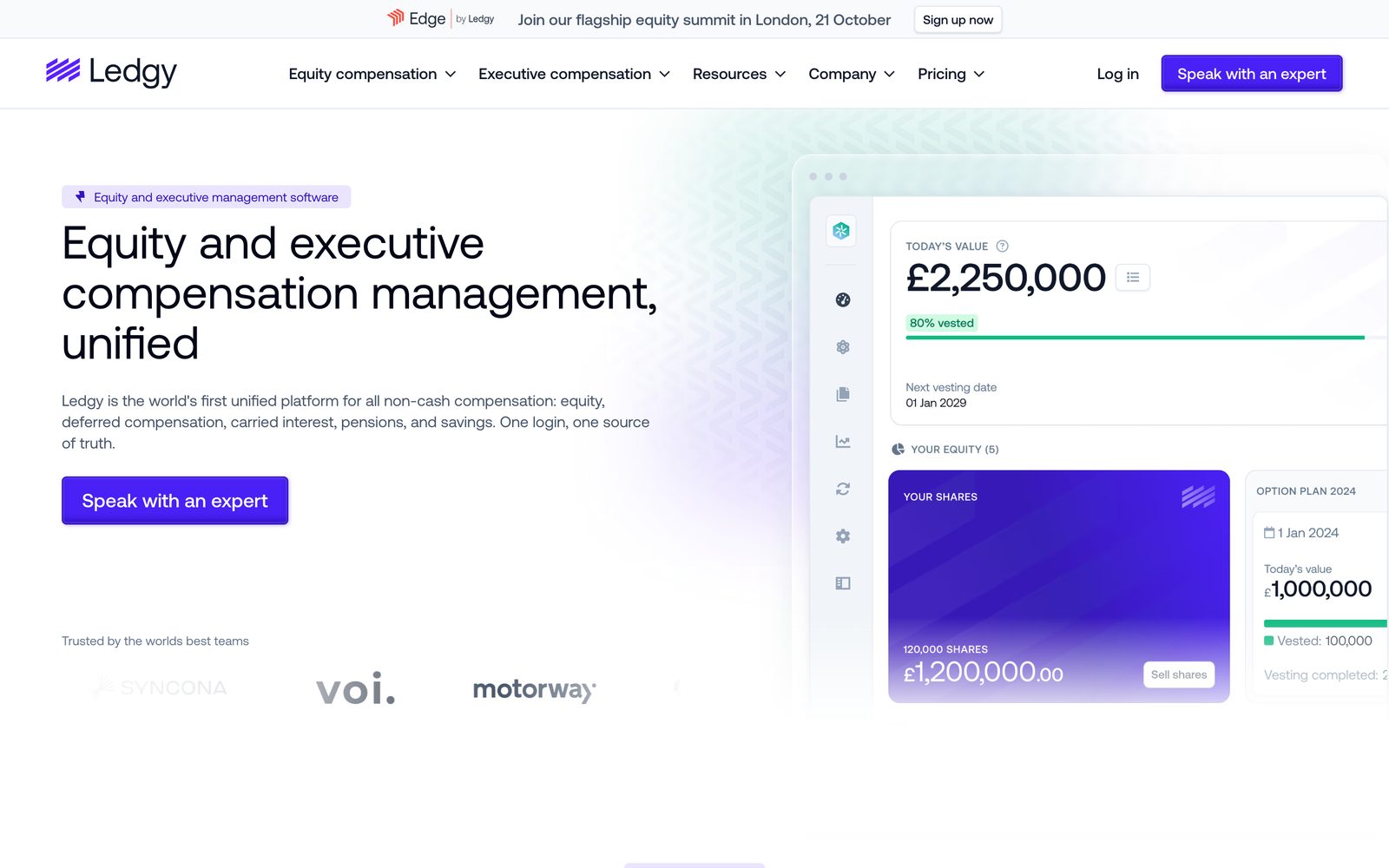
Ledgy's equity compliance features estimate tax withholding from rates an admin enters or imports through ShareReporter, track each employee's location history and produce UK filings for Companies House and HMRC.
Strengths:
- Global Mobility Reporting: Ledgy's help center explains that its Work Locations and Vesting Tranches reports show which portion of a grant vested in which country.
- UK Filing Outputs: The platform produces CS01 and SH01 reports for Companies House and ERS returns for HMRC as downloads.
- Multi-Regime Valuations: Ledgy lists 409A, HMRC and BSPCE valuations alongside international grant types, which suits a company running US, UK and French plans.
Limitations:
- Admin-Maintained Tax Rates: Withholding estimates are only as current as the rates someone enters or imports for each country.
- Locations Entered Manually or in Bulk: The help center describes adding work locations through the stakeholder form or a bulk template, which leaves open how a relocation in your HR system gets there.
- Named Filings Lean UK: The country-specific filing outputs on the compliance page are British ones, so check what exists for your other countries.
What Customers Say:
- Nikki Padden, Portfolio and Business Partner, Syncona: On Ledgy's homepage, she said Ledgy "helped us customize the platform to cater to our scheme."
4. Morgan Stanley at Work: Plan Administration With a Global Legal and Tax Database
Morgan Stanley at Work runs plan administration through Shareworks and Equity Edge Online, per its Shareworks page, and Global Intelligence adds an online database of international legal and tax regulations with a compliance dashboard for reminders, alerts and action items.
Strengths:
- Breadth of Reference Material: The database is continuously updated, so administrators work from current rules rather than an outdated memo.
- Public-Company Reporting: Section 16 filings and 409A valuations appear among the reporting events on the Shareworks page.
- Planning Sandbox: Finance teams get a sandbox site for modeling, budgeting and comparing forecasting scenarios.
Limitations:
- Advice Stays Outside: Its pages state that it does not provide legal or tax advice, and its team connects clients with local law firms.
- Mobility Calculations via a Partner: Mobility tax calculations can run through a third-party partner.
- No Published Pricing or Timeline: Neither appears on the product pages, which points buyers toward an RFP-style process.
What Customers Say:
- Dineshni Anumala, Senior Manager, Stock Compensation, MongoDB: In Morgan Stanley at Work's client spotlight, she said the relationship "gave us a level of comfort and resulted in an end product fully tailored to our needs."
5. Qapita: Equity Platform With Advisory and Liquidity Tools
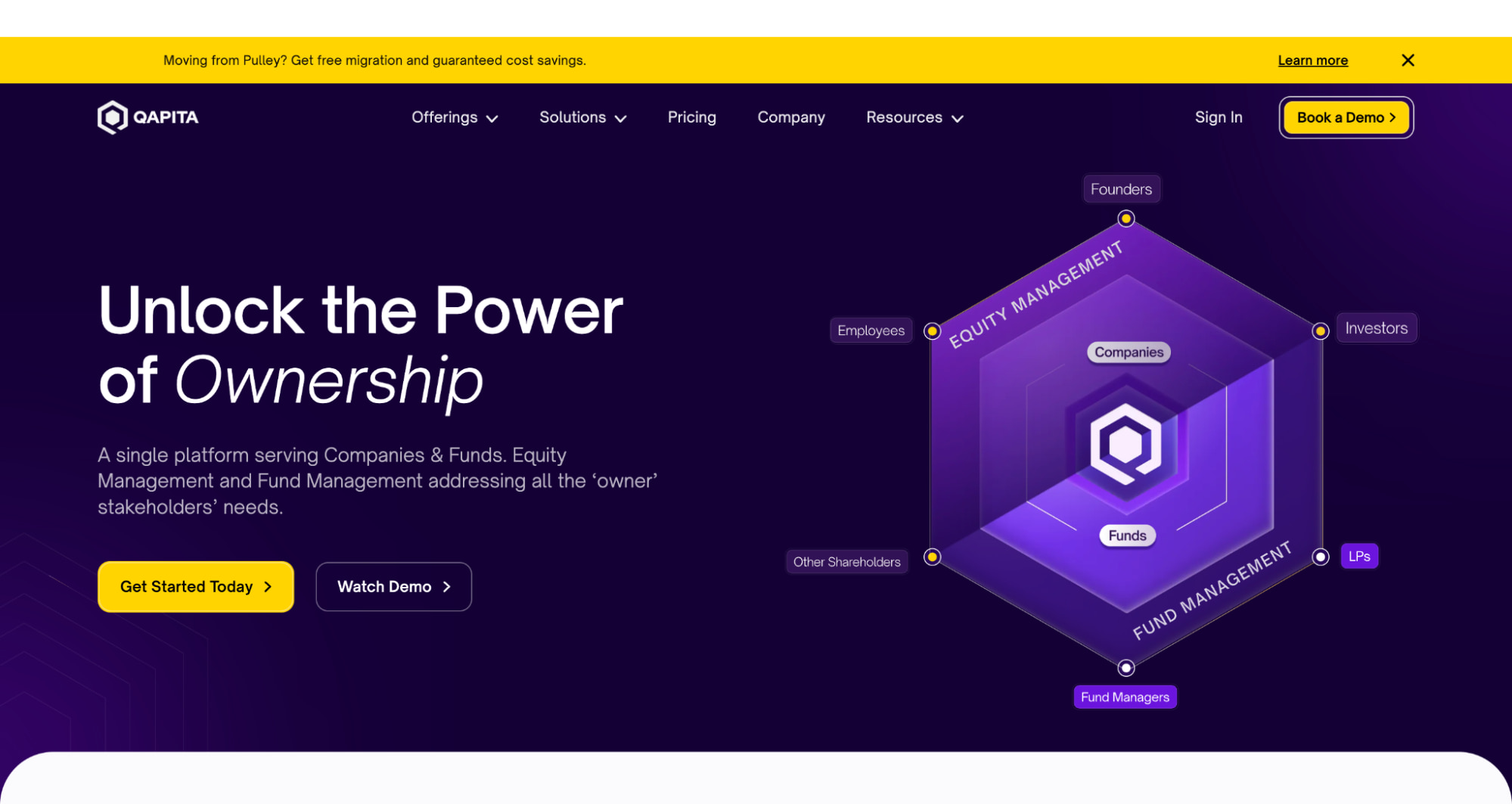
Qapita's equity management platform combines cap table management, stock plans, 409A valuations, ASC 718 reporting, tender offers and equity compensation advisory for companies from pre-seed through pre-IPO.
Strengths:
- Advisory Alongside the Software: Compensation benchmarking and plan design come with the platform, keeping design and administration with one provider.
- Liquidity Tools: Tender offers and secondary transactions run on the platform without breaking the cap table, so ownership stays in one place through the event.
- Cash-Settled Instruments: Phantom stock and SARs are administered with quarterly revaluations and reported under ASC 718, which suits companies that settle some awards in cash.
Limitations:
- Coverage Needs Pinning Down: Its pages cite broad customer and jurisdiction counts without separating reference coverage from in-platform administration, so ask where it administers grants.
- Regional Emphasis: Qapita's own Carta comparison page positions it for teams across the US, India and Southeast Asia, which leaves European depth to test.
- Migration Timeline Not Published: Customers describe a staged move through discovery, data migration, validation and go-live, but no timeline is published.
What Customers Say:
- Jinjin Z, Associate Manager, Performance and Rewards (Mid-Market, 51-1,000 Employees): Quoted on Qapita's equity management page, the reviewer said the "customer success manager flags potential risks we should be aware of."
Global Equity Management Software: Comparison Overview
Coverage, compliance and deployment speed are where the five platforms separate, and each cell draws only on that vendor's own pages.
What to Look for in a Global Equity Management Platform
The following criteria separate a platform that stores the outcome of a grant from one that carries its obligations.
- In-Platform Compliance vs. External Counsel: Ask whether the platform tells you, at grant, what a country requires. If each answer ends at your law firm, the compliance layer sits outside the product.
- Finance, HR, and Legal on One Source of Truth: One record should feed approvals, HR data and stock-based compensation, since two systems reconciled monthly can drift apart between closes.
- Tax Estimates and Withholding Built Into the Workflow: Withholding follows from the instrument, the regime and the event, so look for per-stakeholder, per-event estimates ready before payroll needs them.
- Employee Mobility Tracking That Updates Compliance Obligations: Moving partway through vesting can change which countries may tax the award, so the platform should pick up the move from HR data and update the estimate.
- Onboarding Speed and Migration Support: Ask who audits the data you bring, how discrepancies get resolved and when your team signs off on the migrated records.
How to Choose Global Equity Management Software for Your Stage and Footprint
The steps below narrow the field, best taken with your controller, HR lead and counsel in the same demo.
- Map Where Your Equity Holders Sit Today and Where You Hire Next: List your current countries and the next two you expect to enter, since price and coverage depend on that list.
- Ask Each Vendor to Walk Through One Non-US Grant: Bring a real case, such as a London hire receiving options, and follow it from approval to a tax estimate.
- Confirm Whether Compliance Alerts Are Workflow-Native or Reported Separately: An alert inside the grant screen can change the decision while it is open, whereas a later report only records it.
- Verify Migration Support and Who Reconciles the Data: Ask whether the vendor audits your grants, approvals and documents before go-live or leaves reconciliation to you.
- Get Year-Two Pricing in Writing Before Signing: Country-based editions and stakeholder limits move the price as you grow, so get the second-year figure in writing.
Conclusion
What the Austin company needed for its London grants was not a better share register but someone who saw the HMRC deadline months ahead, while its Berlin options needed to reach German payroll before anyone exercised them. The five platforms here differ mainly in when an obligation like that comes into view, whether at the grant, at exercise or in a conversation with advisors the company already pays.
Slice Global brings that moment forward to the grant itself. As the AI-native global equity management and compliance platform covering 67+ countries, Slice keeps compliance alerts, tax estimates and the equity record in one place for finance, HR and legal, so obligations like Austin's can surface while there is still time to act.
Gal Acrich is an accomplished lawyer and accountant specializing in technology and equity management. Holding dual Bachelor’s degrees in Law and Business/Management, Gal currently leads Business Development & Compliance at Slice. This role involves navigating complex international equity regulations and tax codes. Previously, Gal served as a Senior Strategy and Transactions Consultant at EY and has substantial legal experience from her time at H-F & Co. Law Offices. Her expertise in blending law, business, and technology makes Gal a pivotal figure in global equity management.


News
Cross-Border Equity Starts with HR and Finance on the Same Page
Cross-border equity gets risky when HR, legal and finance work from different information. Here's what alignment looks like, plus a live session with Slice, PwC and HiBob.

News
Slice Partners with Papaya Global to Bring Compliant Equity to Every Global Worker
Slice and Papaya Global are connecting global payroll with global equity. Companies can now grant equity to any worker, in any country, and handle equity events from tax calculation to payout.


Global Equity Management
Equity Management: What It Is, How It Works, and What Companies Get Wrong
Equity management covers more than ownership records. This article explains how it differs from cap table management, what a working program includes, why it gets harder once employees sit in more than one country, and where the obligations most often go wrong.
Manage your equity worldwide
Book a Discovery Call

