

Product
Why Global Equity Is One of the Hardest Software Systems to Build
Slice looks like a platform for grants and compliance, but underneath it runs a dozen deep engines working together. Here's why connecting them into one system is one of software's hardest

Key Takeaways
- Global equity sits at the intersection of Finance, Legal, HR, tax, payroll, and local regulation - a single event like a relocation or termination can trigger a chain reaction across all of them.
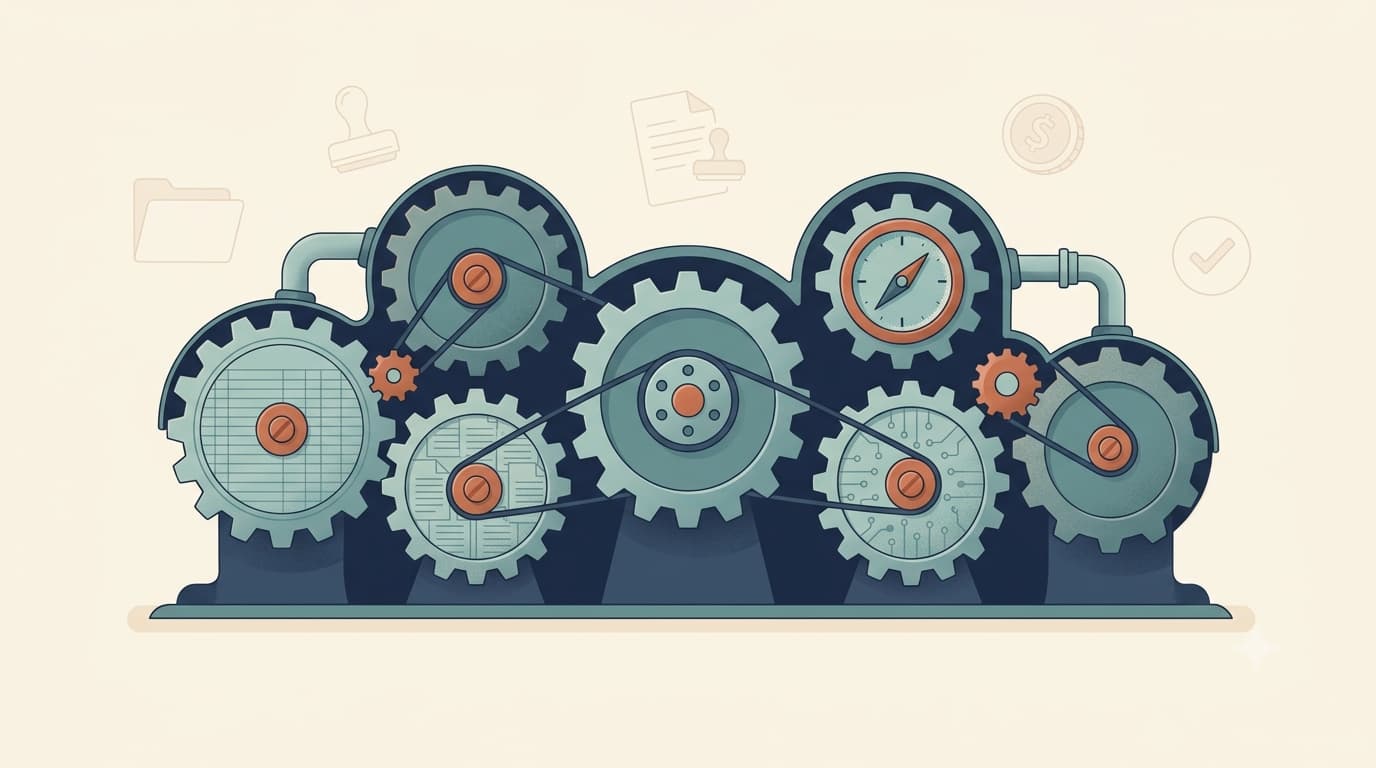
- Slice runs on more than a dozen deep engines - equity, tax, compliance, mobility, documents, workflow, reporting, permissions, and more - each one complex enough to be its own standalone product.
- The hardest engineering problem isn't building any one engine. It's making all of them work together in real time on top of a single, adaptable data model.
Equity Is Not One Product, It Is Many Systems Running Together
Slice is not just a cap table, document room, workflow tool, HRIS integration, or AI assistant.
It is all of those things connected into one operating system.
A single equity event can touch Finance, Legal, HR, payroll, executives, employees, external counsel, and auditors. The product needs to understand how those teams work, how the data connects, and what action should happen next.
Each Engine Is an Entire World
Each engine inside Slice is difficult enough to be its own standalone product. Take three of them.
The equity engine has to track a grant through every state it can pass through - vesting on schedule, pausing during a leave of absence, opening a narrow exercise window at termination, changing terms in a repricing - and know exactly which version is true at any given moment. Say an employee is granted options, takes a leave of absence that pauses vesting, returns, and then leaves the company entirely eighteen months later. The engine needs to know exactly how much of that grant vested, when the post-termination exercise window opens and closes, and what happens to the unvested balance, without anyone manually reconstructing the timeline from grant letters and HR records.
The tax and compliance engine is a deterministic calculator that has to hold the rules for every country, every instrument type, and every combination of tax treatment and mobility history - and stay current as those rules change. Say an employee exercises options while working in a country with an unusual withholding rule for that specific instrument. The engine already has that rule encoded, calculates the exact withholding, and knows whether a filing deadline is attached. No guessing, no waiting on outside counsel to research it.
The documents engine reads and reconciles legal paperwork the way a skilled lawyer or accountant would. A grant agreement, a later amendment, and a board consent can land in the system for the same employee. The engine classifies each one, extracts the vesting terms and dates, flags where the amendment contradicts the original agreement, and ties everything back to the correct grant and stakeholder - the kind of cross-checking that would otherwise take hours to catch by hand.
Layered around these are a workflow engine that can orchestrate custom legal steps per client and scenario, a reporting engine that generates and schedules complex reports for tax authorities, a permissions engine that controls who can see which data down to the row level, and an engine dedicated to stock-based compensation expensing across any accounting standard. Each one is deep enough, on its own, to be a product a company would pay for.
The Hardest Part Is Making the Engines Work Together
Building each engine is already hard. Connecting them is much harder.
When an employee moves to another country, the HRIS integration cannot simply update a location field. That change needs to flow into the mobility engine, trigger tax logic, update compliance exposure, affect reporting, notify the right teams, and preserve the full audit trail.
When a termination happens, it is not just an HR status change. It may trigger post-termination exercise windows, employee notices, equity pool updates, document generation, legal review, and reporting changes.
When a document is uploaded, it should not just sit in storage. The system needs to understand what it is, extract the right data, compare it to existing records, identify gaps, and connect it to the right workflows.
This is why the platform needs deep connectivity between engines, not just separate modules sitting next to each other.
Integrations and Customization Are Core Infrastructure, Not Add-Ons
Employee data drives equity outcomes. Start date, termination date, country, entity, employment type, department, role, manager, and mobility history can all change an equity workflow or a compliance obligation. That means HRIS integrations need to be accurate across many providers and many customer setups - bad integration data in global equity isn't just a sync issue, it can become a legal, tax, payroll, or compliance issue.
The same logic applies to how companies work day to day. Every finance and legal team uses different documents, approval flows, reporting structures, and internal processes - multiplied by every country, entity, and equity plan they manage. Slice cannot force companies to change how they work just to fit the product. The system has to adapt to them: custom legal workflows, different document types, country-specific requirements, and customer-specific ways of storing equity data, all while staying structured and compliant underneath.
Onboarding Is a Product Challenge of Its Own
Companies do not arrive with clean, perfect data. Their historical equity records are often spread across spreadsheets, PDFs, law firm files, board approvals, HR systems, payroll tools, and cap table exports.
Slice has to ingest that data, understand it, clean it, structure it, and connect it, without losing the original context. That matters because compliance isn't only forward-looking. Getting it right often requires understanding what happened historically, not just what happens from today forward. Turning messy, company-specific history into a live operating system is a data intelligence problem, not just an import process.
The Data Model Is the Foundation
All of this depends on the data model.
A shallow data model can support screens. A deep data model can support reasoning.
Slice has to model people, grants, plans, documents, entities, jurisdictions, workflows, approvals, tax rules, reporting obligations, permissions, and historical events, all connected over time, structured enough to be accurate but flexible enough to handle new countries, new edge cases, and new product layers.
If the data model isn't deep and adaptable, every engine built on top of it is limited by that ceiling. That foundation is also what makes it possible to build fast without cutting corners.
Continue reading: Building Global Equity Infrastructure in the AI Era
Samuel Amar is Co-Founder and CTO of Slice, where he leads engineering and product architecture behind the platform's deterministic and AI-native systems. Prior to Slice, he worked as a full-stack and blockchain engineer for companies including Cyabra and Papaya Gaming, building systems across decentralized and traditional infrastructure. Samuel holds a B.Sc. in Software Engineering (Cum Laude), with a major in Cyber Security, from the Technion Institute of Technology.

.jpg)
News
Looking for an Alternative to Your Cap Table Platform? Here's What Global Companies Are Saying
A single-country cap table platform doesn't solve global compliance. Here's what companies managing equity across borders are actually looking for.

Global Equity Management
Global Equity Compensation: What Breaks Across Borders and How to Fix It
A practitioner's guide to global equity compensation, covering where the same grant is taxed differently across countries, which employer obligations carry hard deadlines, and an honest look at the parts of a cross-border program no platform can standardize away.

.svg)

