

Global Equity Management
Global Equity Compensation: What Breaks Across Borders and How to Fix It
A practitioner's guide to global equity compensation, covering where the same grant is taxed differently across countries, which employer obligations carry hard deadlines, and an honest look at the parts of a cross-border program no platform can standardize away.

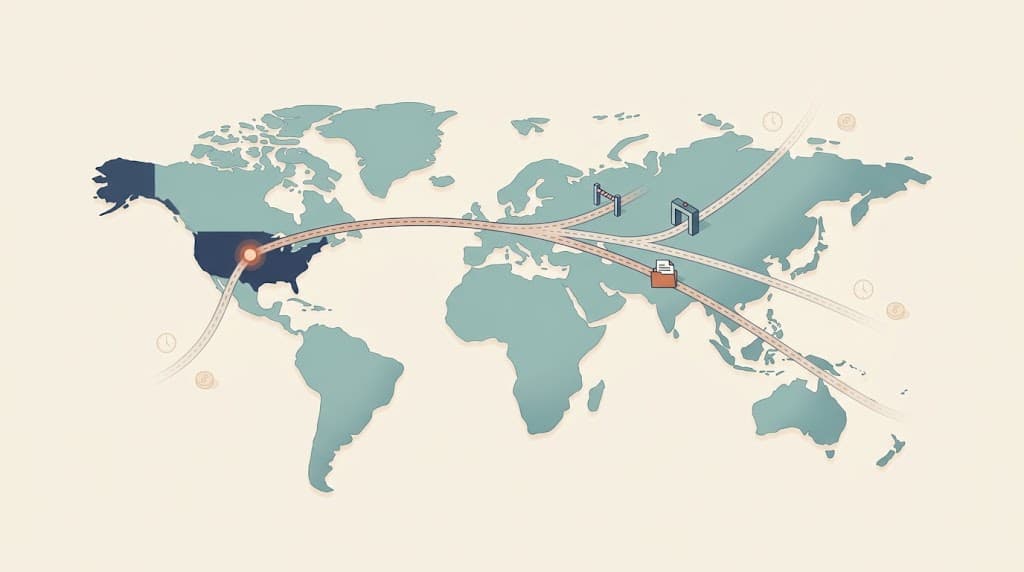
Key Takeaways
- Cross-border grants create local obligations: Taxing points, withholding, securities rules, and reporting deadlines vary by country, creating exposure when US terms are reused abroad.
- Employment structure affects equity treatment: EORs can limit access to tax-advantaged regimes, while local subsidiaries may carry withholding or deduction obligations.
- Relocations increase compliance complexity: Employee moves can split one award across multiple tax jurisdictions, especially when Finance, HR, and Legal data are disconnected.
- Scalable programs plan for local variation: Country-specific documentation, filing workflows, and a shared source of truth help prevent compliance gaps.
A US company grants options to its first UK employees on the documents its US employees hold. Nothing breaks until someone exercises. Because the shares are readily convertible assets, the UK employer must operate PAYE, and if it cannot deduct enough from pay, the employee has 90 days to reimburse the company, or a further charge arises under section 222 ITEPA that paying late does not remove.
Six months later, the company hires in Germany, where the local entity must run German wage tax withholding even though the US parent made the grant, because pay from a third party counts as wages between affiliated companies.
Neither obligation appears in the original plan. This article covers what global equity compensation is, where it breaks, and what a program must do differently to survive its fourth country.
What Is Global Equity Compensation?
Global equity compensation is the practice of granting ownership, whether options, restricted stock units, or cash-settled equivalents, to employees sitting in different tax, securities and payroll jurisdictions. The instrument is identical everywhere. Almost nothing else is.
Equity stops being record-keeping here and becomes regulatory infrastructure. A system built for one tax regime and one set of filing dates holds its numbers correctly and still leaves the company exposed, because the obligations attached to those numbers differ employee by employee.
Global Equity Compensation vs. Cash-Only Compensation
Cash crosses borders cleanly, taxed where the work happens and handled by local payroll. Equity does not, and the differences are structural rather than administrative.
The Compliance Surface That Grows With Every Country
Each new country adds obligations alongside the existing ones rather than replacing them. Four compounds faster than teams expect.
- The Same Grant Triggers Different Tax Treatment Everywhere: Germany taxes an option when it is exercised and the shares booked, France taxes a qualifying BSPCE gain only on sale, and Australia defers the taxing point as far as 15 years.
- Securities Exemptions That Work in the US May Not Apply Abroad: Rule 701 exempts an offer from section 5 of the US Securities Act and nothing else. The EU employee exemption applies only if an information document is made available, a condition the UK kept when its prospectus rules took effect on 19 January 2026.
- US Equity Plan Documents Often Break in International Contexts: Canada's 50% deduction requires an exercise price not less than fair market value at grant, and Australia's start-up concession requires at least the market value of an ordinary share. A discount that is routine in the US disqualifies the local relief.
- Most Platforms Treat Global Grants as an Afterthought: Equity tools were built for single-country operations, so an international grant is stored as an accurate record with a country field attached. Missing is the layer that knows a French vesting event starts a notification clock and a Canadian non-qualified security a 30 day one.
Types of Global Equity Compensation
The instrument chosen at the outset decides how much jurisdictional complexity the program inherits.
1. NSOs: The Default for Cross-Border Grants
Incentive stock options are a creature of the US Internal Revenue Code, so the non-qualified option is the default traveling instrument. One with no readily determinable value at grant produces income on exercise, measured as the stock received less the amount paid. The appeal is portability rather than efficiency.
2. RSUs: Simpler to Issue, Harder to Tax Globally
Restricted stock units remove the exercise decision, which makes them easier to administer and harder to tax cleanly. In the UK, the charge falls when the shares are acquired. Germany looks instead for beneficial ownership, so where restrictions are comprehensive there is no taxable wage until they fall away. Even inside the US, the clocks differ, since deferred amounts enter FICA at the later of service and forfeiture lapse.
3. SARs and Phantom Stock: Where Direct Ownership Is Restricted
Where local law or entity structure makes issuing real shares impractical, cash-settled awards reproduce the economics without touching the share register. They usually lose tax-advantaged treatment and behave like ordinary pay. Canada treats a plan with no agreement to issue securities as employment income taxed when received, and a cash-out attracts employment insurance premiums that a non-cash benefit does not.
4. Country-Specific Plans: EMI, Section 102, and Local Regimes
Several countries offer statutory regimes that materially improve the outcome, each with its own eligibility test. The UK's Enterprise Management Incentive charges no income tax or National Insurance at exercise provided the employee pays at least the grant-date value, subject to a £250,000 individual limit and a working time test, and it widened on 6 April 2026 to companies with gross assets up to £120 million and fewer than 500 employees. France offers BSPCE, Germany a deferral under § 19a EStG, Israel has Section 102, Australia its start-up concession. None of them travel.
How EOR and Subsidiary Structures Affect Global Equity
How a company employs someone abroad changes what it can grant them, who withholds, and whether the cost is deductible locally.
EOR Employees Often Fall Outside Tax-Advantaged Plan Eligibility
Most statutory regimes require the grantor to be the employer or a company it controls. UK EMI options may only go to employees of the granting company or a qualifying subsidiary, meaning one more than 50% owned by it, and an employer of record is an independent third party. Canada arrives at the same place, since section 7 applies only between non-arm's-length qualifying persons. The award can still be made; it cannot be the tax-advantaged one.
Withholding When the Legal Employer Is Not the Grantor
The obligation attaches to whoever the local rule points at, frequently not the granting entity. HMRC is blunt that the PAYE must be paid whether or not the employer has recouped it. In the US, where the service recipient lacks legal control of the payment, the employer is the person with that control. Settle this per country before the first grant.
How Local Subsidiary Structure Affects Plan Design
Groups commonly recharge the cost of parent-granted equity to the employing entity, and HMRC recognizes the intra-group recharge as normal practice. Whether it achieves anything depends on the country. The UK deduction is automatic and the recharge itself disallowed under Part 12 CTA 2009, France makes the deduction conditional on invoicing the employing company, and Canada generally denies it under section 7(3)(b).
Where Global Equity Programs Break Down in Practice
Failures here are rarely exotic. They cluster into four patterns, each visible in the calendar before it appears in a penalty notice.
- Missed Withholding Obligations Across Multiple Countries: Every country uses a different form and date, so each obligation is simple alone and easy to drop collectively. France is the strictest, where the employer must tell URSSAF whose free shares vested and their value in the calendar year following the vesting period, or the full social security contributions fall due, including the employee share.
- Tax Bills at Exercise With No Liquidity to Cover Them: In a private company, an exercise creates a real charge against shares nobody can sell. Where the UK employer cannot recover enough PAYE, the employee must make it good within 90 days of the tax year end or face an additional charge.
- Plans That Never Update as Employees Relocate or Regulations Change: Where an option relates to employment in more than one country, the OECD approach apportions the benefit by the days worked in each, and HMRC does the same, time-apportioning gains by workdays between grant and vest. One transfer turns one award into two tax positions.
- Finance, HR, and Legal Working Off Different Data: HR knows when someone moved, Legal knows what the plan permits, Finance knows what must be withheld. Split across three systems, the move that changed a tax position reaches Finance after the event that needed it.
How to Build a Program That Scales
A program survives its next five countries when the structure anticipates variation instead of absorbing it as exceptions.
1. Design for Multi-Jurisdiction Flexibility From the Start
Write the plan so country terms are appendices to one global document rather than separate plans negotiated individually. The grant-date pricing rule protecting Canada's deduction and Australia's start-up concession then becomes a global default, leaving genuine exceptions visible instead of accumulating quietly.
2. Build Country-Specific Grant Letters and Tax Documentation
The grant letter is where local requirements become enforceable, so it must reflect the regime being claimed rather than restate US terms. Canada's 30 day written notice for non-qualified securities carries a statutory clock, and missing it cannot be cured by getting the tax right later.
3. Establish Withholding and Filing Workflows Before Deadlines
Equity deadlines are unusual in being known years ahead and missed anyway. Build the calendar from the obligations rather than the fiscal year, because the UK's 6 July return and France's URSSAF window align with nothing in the finance close.
4. Connect Finance, HR, and Legal to One Source of Truth
Most of the failures above are data problems wearing a compliance costume. When a relocation recorded in HR updates the tax position automatically, the apportionment question gets asked while it can still be answered, which is the argument for treating equity as shared infrastructure across the three functions.
How Slice's Exposure Intelligence Catches Global Equity Risk Early
Most equity systems report what happened. The harder requirement is being told what is about to go wrong while there is time to act, which is the gap Slice built Exposure Intelligence to close.
It surfaces the vulnerabilities in a company's equity operations and lets the team remediate them directly, so a missed local condition appears as a flag rather than a finding in next year's audit. Most global equity exposure comes from a correct decision in one country applied unchanged in another, which is why catching it at the grant is the difference between a correction and a penalty.
How High-Performing Finance Teams Keep Global Equity Risk Under Control
Teams that run multi-country equity without recurring surprises share four habits, none needing more headcount.
- Never Assume Compliance Carries Over Between Countries: Reusing what worked is what fails here, because qualifying in one regime says nothing about the next. Treating each country as a fresh eligibility test is slower once and cheaper permanently.
- Communicate Equity Value Clearly; Complexity Reduces Perceived Value: An employee who cannot predict what they will owe discounts the award, so the company pays for equity that buys no retention. Explaining the taxing point in their own regime is a compensation decision.
- Audit Historical Grants Before Scaling to New Markets: Entering a new country exposes the previous three, because the review that finds the new requirement also finds the old grant that never met one.
- Replace Reactive Outside Counsel With Proactive Monitoring: Per-question advice is accurate and arrives after the event that needed it. Continuous monitoring moves counsel from routine questions to genuinely novel ones.
How Slice Manages Global Equity Across 60+ Countries
Slice is the AI-native global equity management and compliance platform, holding cap table, grants, exercises, compliance, SBC and tax reporting in one system rather than splitting the record from the law that governs it.
- Checks Every Grant and Exercise Against Local Law in Real Time: The global compliance layer evaluates each action against the rules of the country the employee sits in, as it is taken.
- Captures Tax-Advantaged Treatment Before Deadlines Pass: EMI, BSPCE and the German deferral apply only if their conditions are met at the time, so the test runs when the grant is created.
- Generates Country-Specific Grant Letters and Reports Automatically: Slice generates the equity reports required per country from the record that holds the grants, and calculates stock-based compensation expense for US-GAAP and IFRS reporting from it too.
- Connects Finance, HR, and Legal Into One Agentic Workflow: Integrated Agentic Workflows tie the three functions to one source of truth, so a change recorded by HR reaches the tax position without re-keying.
- Flags Compliance Exposure Before It Becomes a Penalty: Exposure Intelligence surfaces risk while it is correctable, in penalties avoided and employee claims that never arise.
Conclusion
Global equity compensation breaks in predictable places. The taxing point moves country by country, the withholding obligation attaches to the local employer rather than the granting entity, statutory reliefs carry conditions that must be met at grant, and the filing deadlines sit outside the finance calendar. None are hard problems individually, which is why they are missed at scale.
A program that treats each country as a variation of one global plan, keeps Finance, HR and Legal on the same record, and tests obligations as they arise will absorb its next five markets. One that treats each country as an exception keeps meeting the same problem, one jurisdiction at a time.
FAQ
What should a US company check before granting equity to employees in another country?
Before issuing a global equity grant, confirm the local tax, withholding, securities, documentation, and reporting rules instead of assuming the US plan travels unchanged.
- Identify the employee’s employing entity, work country, award type, grant terms, and expected taxable event.
- Determine whether local tax-advantaged treatment has eligibility, pricing, documentation, or employee-status requirements that must be satisfied at grant.
- Establish who owns payroll withholding and subsequent reporting before the award is approved.
- Use country-specific terms or grant documentation where local requirements differ from the global plan.
How should a multinational company manage equity when employees relocate between countries?
Treat a relocation as a compliance event that can change the tax allocation, withholding, reporting, and documentation attached to an existing award.
- Preserve grant, vesting, exercise, employing-entity, and work-location histories rather than simply replacing the employee’s country field.
- Determine whether the old and new jurisdictions allocate the award according to workdays or another locally applicable method.
- Route the change to payroll, finance, legal, and equity operations before the next taxable event.
- Keep evidence of the employee data, calculations, approvals, and resulting actions for later audit or reporting.
See how HRIS synchronization can keep employee data aligned with equity administration.
How can Slice help operators catch country-specific equity compliance issues before a grant or exercise?
Slice can connect an equity event and employee context with its global compliance workflow so operators can evaluate country-specific requirements and act before completing the relevant process.
- Input: employee jurisdiction and relevant equity data enter the equity administration workflow.
- Evaluation: Slice’s global compliance capabilities support country-specific compliance analysis around the applicable equity action.
- Operator action: Finance, Legal, HR, or equity teams review the identified requirement and complete the necessary documentation, approval, reporting, or other follow-up.
- Outcome: the company can address compliance requirements during the equity lifecycle instead of discovering them only through a later audit or filing problem.
Explore Slice’s global compliance workflow.
Yarin Yom-Tov is a Product Tax Manager at Slice, where he integrates global tax laws into the company’s platform by transforming complex international regulations into proactive compliance insights and tax calculations. Prior to joining Slice, he practiced tax law at a leading law firm and a top-tier boutique, focusing on international taxation and strategic tax planning for both corporations and individuals. Yarin holds an LLB in Law and a BA in Economics from The Hebrew University of Jerusalem.


News
Pulley Is Shutting Down: Here's What You Need to Know
If you're on Pulley, here's what's actually happening, the deadline you're working with, and what's worth evaluating before you commit to what's next.


News
Phoenix ESOP + Slice: One Trustee Platform
Phoenix ESOP, Israel's largest Section 102 trustee, is moving its startup trustee operations onto Slice. Trustee, cap table, and compliance now run on one system


Global Equity Management
Best Cap Table Software for 2026: Top 6 Picks for Finance, Legal & HR Teams
A practitioner review of six cap table platforms for companies granting equity in more than one country, with comparison tables, three pros and cons per tool, and an honest look at the work that stays outside the software, whichever vendor you pick.

.svg)

