

Global Equity Management
Multi-Country Equity Management: How to Run a Compliant Global Equity Program


Key Takeaways
- Cross-border equity can create new compliance obligations: The same grant can trigger different tax, withholding, filing, and reporting requirements depending on the instrument, the employee’s residence, and where the work is performed.
- Country rules directly affect equity treatment: The UK, Israel, India, Germany, and the US each impose distinct requirements around tax treatment, registration, reporting, or withholding.
- Employee relocations complicate taxation: Moving mid-vesting can split an award across jurisdictions, which can create ongoing sourcing, withholding, and reporting obligations depending on local law and any applicable treaty.
- Compliance should precede grant issuance: Companies should establish country addenda, withholding workflows, audit trails, and historical exposure reviews before scaling internationally.
A US company with a Delaware parent grants options out of a single stock plan approved by its board in San Francisco. For three years it does exactly what it should. Then the company hires four engineers in London and a sales lead in Berlin, and the same paperwork goes out unchanged. Nobody registers the plan with HMRC, so the UK options lose the tax-advantaged treatment they could have had. The Berlin grant creates no German tax on the day it is made, but it can mean a future payroll obligation at exercise or transfer that the US payroll never sees. The plan did not change. The jurisdictions did.
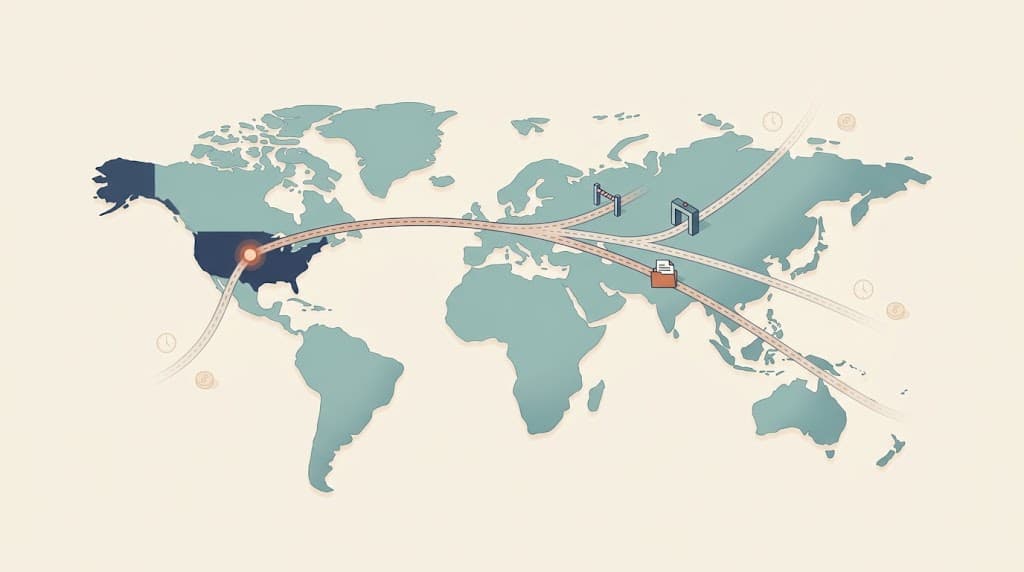
Multi-country equity management is the work of keeping one equity program compliant in every country an employee sits in. This guide covers what makes it hard, which instruments travel well, what changes in five specific countries, what happens when an employee moves mid-vesting or sits under an employer of record, and how to structure a program that survives the next 10 hires.
What Is Multi-Country Equity Management?
Multi-country equity management is the administration of a single equity program across several tax and legal jurisdictions at once. It covers plan design, grant issuance, withholding, filings, reporting, and the record of every event behind them.
The distinction that matters is that a domestic program is record-keeping, and a multi-country program is regulatory infrastructure. In one country, a grant is an entry in a cap table. In six, the same action can carry a different taxable moment, a different withholding duty, and a different filing deadline in each. The equity is the same. The obligations often are not.
Why Multi-Country Equity Management Gets Complicated
Four forces can turn a working domestic plan into a compliance problem once it crosses a border. They compound, and they rarely announce themselves at the time of the grant.
- Different Tax Treatment by Jurisdiction: The same option can be taxed at grant, at vest, at exercise or at sale. Which one applies depends on the instrument, the regime, the employee's residence, where the work was performed and the event, not only where the employee works today, and any withholding duty generally follows that moment rather than the grant date.
- Securities and Filing Requirements: Offering shares to employees is a securities offering. Many countries relieve employee plans from full prospectus rules, but the exemptions, disclosure and filing requirements differ substantially. Many apply without any pre-grant registration, while others call for an information document or a notice to the regulator.
- FX and Ownership Restrictions: Some countries limit how much foreign stock a resident may hold and how sale proceeds are repatriated. These are exchange-control rules, not tax rules, and tax advisors do not always flag them.
- Limitations of Domestic Equity Platforms: Many equity tools were built for one tax regime and one employment classification. They can store the grant correctly and say nothing about a local obligation it may have created, which is often the gap a finance team discovers during an audit.
Types of Equity Used in Multi-Country Programs
The instrument you choose decides how much local complexity you inherit. Four show up repeatedly in global programs, and they behave very differently once a second country is involved.
Country-by-Country Considerations for Multi-Country Equity
Five markets illustrate how far the rules diverge. The pattern to notice is that the differences are not edge cases. They are the main design decisions. Each summary below is general and depends on the facts of the grant.
- United States - ISO vs. NSO Treatment and the 83(b) Election Window: An incentive option creates no ordinary income at exercise for regular tax purposes, while a nonstatutory option is generally taxed on the spread when it is exercised. ISOs can only go to employees, and only $100,000 of value can first become exercisable in a year, which pushes many cross-border programs onto NSOs. An 83(b) election is not filed because an option is granted. It applies when substantially nonvested property is transferred, such as restricted shares or shares from an early exercise, and must then be filed within 30 days, with no extension.
- United Kingdom - EMI and CSOP Tax-Advantaged Treatment: EMI can deliver no income tax and no National Insurance on exercise where the option is granted at market value and the company and employee keep qualifying. The £120 million gross-asset and 500-employee limits apply to options granted on or after 6 April 2026, and earlier grants use the previous £30 million and 250-employee thresholds. CSOP allows up to £60,000 per person, usually exercised between three and 10 years after grant, with statutory exceptions, including some corporate events, that permit earlier exercise. Both require the plan to be registered with HMRC.
- Israel - Section 102 Plans and ITA Trustee Requirements: The capital gains track requires the shares to be held by an approved trustee, and the plan and its supporting documents to be submitted to the Israel Tax Authority before grants are made. Under the applicable Section 102 approval route, grants can generally be made only once 30 days have passed from that submission, so the timing of the first grant has to be planned against the filing date.
- India - FEMA Controls, ESOP Reporting, and Repatriation Rules: Plan shares in a foreign parent fall under India's overseas investment rules, which set conditions on how the employee is engaged, the size of the holding and how proceeds come home. The exercise benefit is taxed as a perquisite and the Indian employer generally withholds. Under the RBI's Master Direction on Overseas Investment, the group's Indian entity employing the individual reports the acquisition within sixty days of the half-year ending September or March.
- Germany - Progressive Tax on Transfer and Dry Income Risk: The benefit is generally employment income, taxed at progressive rates, when the shares are transferred, which can mean a tax bill on an asset nobody can sell yet. Section 19a of the Income Tax Act can defer that income tax, in some cases for up to 15 years, but only where its conditions for the company and the employee are met, and social security contributions are not deferred with it.
What Happens When an Employee Relocates Mid-Vesting
A relocation does not simply move an award from one country to another. Depending on domestic law, treaties, the award type and the service period, its income may be apportioned between the countries over the period it was earned.
- Relocation Can Split One Award Across Two Tax Regimes: The OECD's model commentary apportions an option earned across two countries in proportion to the days of employment exercised in each country over the period the option relates to. Both countries may have a claim on the same award, although a treaty can restrict one country's taxing rights and double-tax relief may apply.
- Many Platforms Miss the Compliance Event When Jurisdiction Changes Mid-Vest: The record updates the employee's address. If nothing revisits the sourcing of the unvested tranches, the next vest is withheld exactly as it would have been before the move.
- Relocation Is an Ongoing Obligation, Not a One-Time Record Update: Where apportionment applies, it can carry through the remaining vests, and through the exercise and sale that follow, sometimes years after the employee left.
- Failure to Track Mobility Can Create Withholding Exposure in More Than One Country: The origin country may be under-withheld on the portion earned there, and the destination country may never learn the award existed. Either may also have no withholding duty, and any liability can fall on the employing entity, the payroll, the grantor or the individual.
How EOR Arrangements Affect Multi-Country Equity
An employer of record solves the hiring problem and can quietly complicate the equity one, because the company issuing the shares is not the company employing the person. Each effect below depends on the country and the arrangement.
Where Multi-Country Equity Programs Break Down
The failures below are not exotic. Each one is a pattern that repeats at companies making their first few hires outside the home market.
- Assuming the US Plan Structure Works in Every Jurisdiction: A US plan document plus a local employment contract is not always a compliant local grant. A country addendum is often advisable to adjust terms local law does not permit, and whether one is legally required depends on the jurisdiction and the regime selected.
- Missing Withholding Deadlines Across Multiple Countries Simultaneously: A vest that clears a US payroll cycle can sit past a statutory remittance date elsewhere, and penalties can attach to the employer. A late UK share plan return alone draws an automatic £100, a further £300 at three months and £10 a day after nine.
- Failing to Meet Local Registration or Reporting Requirements Before Granting in New Markets: Some regimes require registration, some only reporting or disclosure, and some allow corrections or late filings. UK EMI and CSOP do require HMRC registration, and a missed step there can cost a grant its tax-advantaged status.
- Treating Global Equity as a One-Time Setup Rather Than an Ongoing Program: A new country, a relocation, a termination or a rule change can each reopen the question. A program reviewed once a year can discover its exposure a year late.
How to Structure a Multi-Country Equity Program That Scales
Scaling a global program is mostly a sequencing problem. The work below is generally far cheaper before the grant is issued than after.
- Design the Master Plan for Multi-Jurisdiction Flexibility From the Start: Write the plan so country addenda can attach to it without a shareholder vote, and so award types can differ by jurisdiction.
- Build Country-Specific Addenda and Grant Templates Before Issuing: Where a country needs an addendum, have it reviewed and ready before the first offer letter goes out, not after the employee accepts.
- Establish Withholding and Filing Workflows Before Deadlines Arrive: Map each vest and exercise to the payroll, if any, that must withhold and the return, if any, that must report it, with owners and dates.
- Audit Existing Grants for Historical Exposure Before Scaling: Companies rarely start clean. Find the grants already issued into countries that were never set up, and price the fix while it is still small.
- Build Audit Trails for Every Grant, Exercise, and Termination Event: Regulators and acquirers ask what was approved, when, and under which plan version. Reconstructing that from email is how diligence slows down.
- Align Finance, Legal, and HR on One Source of Truth: Compliance events are often missed at a handoff. HR knows about the relocation, payroll knows about the vest, and neither knows that the other's fact changed the answer.
How Slice Global Simplifies Multi-Country Equity Management
Slice is the AI-native global equity management and compliance platform, built for multinational companies managing equity in more than 60 countries. The compliance engine is the product, not a module attached to a cap table.
- Grants Checked Against Local Rules Before They Create Exposure: Slice supports issuing grants across the countries it covers while adapting to the jurisdiction-specific rules for each grant, so the local treatment is considered at issuance instead of discovered at audit.
- Employee Mobility Tracked and Tax Estimates Updated When Someone Moves: Slice tracks stakeholders' relocations and adjusts tax estimates accordingly, taking nationality and residency history into account rather than the current address alone.
- Country-Specific Reports and Event-by-Event Tax Calculations: Slice produces country-specific reports, including US Form 3921, from the same record that holds the grants, which reduces how often the finance team has to commission them one at a time.
- Compliance Exposure Flagged Before Deadlines, Not After Penalties Arrive: Exposure Intelligence surfaces vulnerabilities in the equity operation, and real-time, country-specific alerts tailored to the equity structure flag exposure before a deadline rather than after a penalty.
- One Source of Truth for Finance, Legal and HR: Finance, legal and HR work from the same equity record, and platform activity is logged, which makes a diligence request easier to answer from the system.
Conclusion
Multi-country equity management is not a harder version of cap table administration. It is a different job. A grant, a vest, a relocation or a termination can create an obligation in one country and none in another, and the countries do not coordinate their deadlines for anyone's convenience. Companies that treat the program as regulatory infrastructure, with addenda written before the offer where they are needed and withholding mapped before the vest, generally spend far less on cleanup than companies that discover the gap during diligence.
That is the problem Slice was built for. As the AI-native global equity management and compliance platform, it tracks grants and jurisdiction changes across the countries it covers and surfaces exposure ahead of the deadline, so it can be prevented ahead of time rather than discovered when it is too late.
FAQ
When does a US company need multi-country equity management?
A US company needs multi-country equity management as soon as an employee receiving equity becomes subject to another country’s tax, securities, payroll, filing, or reporting rules.
- Treat the first equity recipient in a new country as a compliance review point, even if the parent company and stock plan remain unchanged.
- Check the employee’s work location, employment structure, award type, taxable events, withholding requirements, filings, and local documentation before issuing the grant.
- Revisit those requirements when the employee vests, exercises, terminates, or relocates.
- Keep jurisdiction-specific obligations connected to the underlying grant rather than managing international compliance separately from the equity record.
Which types of equity work best for employees in multiple countries?
NSOs, RSUs, SARs, phantom equity, and country-specific plans can all work internationally, but the best structure depends on how each jurisdiction treats the award.
- NSOs offer flexibility but can create local payroll withholding when employees exercise.
- RSUs remove the exercise decision but can create taxable income at vesting, settlement or delivery, depending on the jurisdiction, even when employees have no liquidity.
- Phantom equity and SARs can be useful where direct share ownership creates additional complexity.
- Country-specific arrangements may offer favorable tax treatment but can carry eligibility, registration, trustee, documentation, or holding-period requirements.
How should companies manage equity when employees move countries while their awards are vesting?
Companies should treat an international relocation as an equity compliance event because one award may become subject to obligations in both the employee’s former and new jurisdictions.
- Preserve residency and work-location history instead of simply replacing the employee’s old address.
- Determine whether income associated with the award must be apportioned between jurisdictions.
- Identify which entities or payrolls have withholding and reporting responsibilities at future vesting or exercise events.
- Continue tracking the relocation through the remaining equity lifecycle because the consequences can persist long after the employee moves.
Find out what happens to equity when employees move countries.
How can an enterprise keep equity compliant as it expands into more countries?
Enterprises need repeatable country-level controls that connect employee changes and equity events with approvals, documentation, payroll, reporting, and audit records.
- Maintain a country matrix covering supported awards, taxable events, required documents, reporting obligations, withholding owners, and deadlines.
- Establish approval workflows before grants are issued rather than resolving local requirements afterward.
- Make relocations, terminations, and employment-status changes visible to the teams responsible for equity compliance.
- Preserve evidence of grants, approvals, exercises, cancellations, and other actions so finance and legal teams can reconstruct what happened during an audit or diligence process.
Learn about Slice’s audit trail capabilities.
How does Slice help companies manage equity grants across different jurisdictions?
Slice connects equity grant administration with global compliance workflows so operators can account for jurisdiction-specific requirements as they manage awards.
- Grant and stakeholder information can be managed alongside the jurisdiction relevant to the employee.
- Country-specific compliance considerations can be surfaced as part of the equity workflow instead of being tracked independently from the grant.
- Finance, legal, HR, and equity teams can use that information to coordinate documentation, approvals, reporting, and other required actions.
- This makes international compliance part of ongoing equity administration rather than a separate review performed only after an issue appears.
Yarin Yom-Tov is a Product Tax Manager at Slice, where he integrates global tax laws into the company’s platform by transforming complex international regulations into proactive compliance insights and tax calculations. Prior to joining Slice, he practiced tax law at a leading law firm and a top-tier boutique, focusing on international taxation and strategic tax planning for both corporations and individuals. Yarin holds an LLB in Law and a BA in Economics from The Hebrew University of Jerusalem.

.jpg)
News
Looking for an Alternative to Your Cap Table Platform? Here's What Global Companies Are Saying
A single-country cap table platform doesn't solve global compliance. Here's what companies managing equity across borders are actually looking for.

Global Equity Management
Global Equity Compensation: What Breaks Across Borders and How to Fix It
A practitioner's guide to global equity compensation, covering where the same grant is taxed differently across countries, which employer obligations carry hard deadlines, and an honest look at the parts of a cross-border program no platform can standardize away.

.svg)

