

Product
The Slice Global Employee App: Empowering Employees to Grasp Their Equity Making Equity Understandable
Equity is confusing. See how the Slice Global Employee App creates a "Single Source of Truth," reducing repetitive questions for Finance teams and building trust for employees.
.jpg)
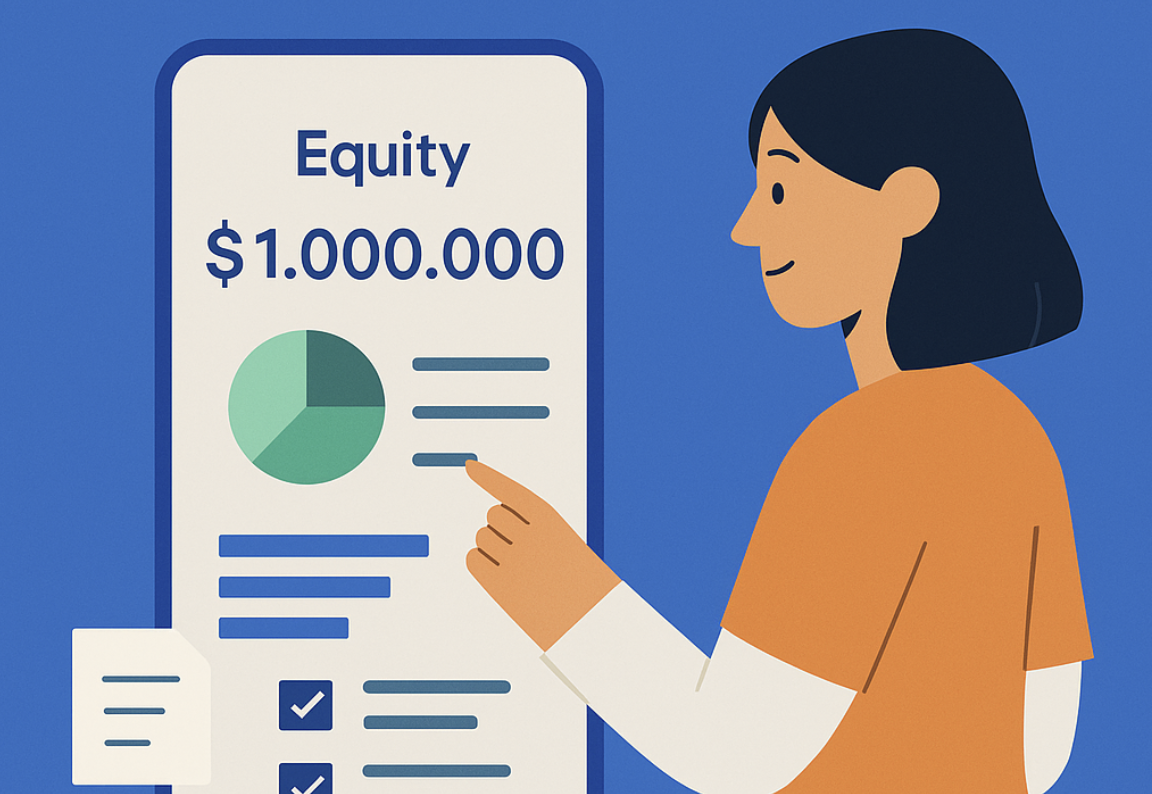
Equity is one of the most meaningful parts of compensation, but for most companies, it’s also the most confusing. CFOs carry the operational and compliance weight of it, HR teams field endless questions, and employees often feel unsure about what they actually own. The information is there - somewhere - but not in a form that’s easy to understand or act on.
We built the Slice Global Employee App to fix that gap completely. Not by adding another portal or dashboard, but by giving employees the exact same clarity, structure, and confidence their leadership team already has inside Slice Global.
Equity management is a two-way street, and it’s time both sides share the same truth.
The Problem: Two Different Realities
If you’ve spent time in finance or HR, you know the pattern well. Employees want to understand their grants, how vesting works, when they can exercise, what it costs, and what taxes apply. These are fair questions but the explanations take time, the back-and-forth is constant, and every employee’s situation is slightly different.
Meanwhile, CFOs and admins see a fully detailed equity system with valuations, tax rules, grant lifecycles, and compliance requirements attached to every action. The gap between what leadership sees and what employees see is huge, and that gap creates operational drag and unnecessary frustration on both sides.
Employees don’t understand equity because they’ve never been given a tool that was built for them. CFOs waste time explaining things the system should already make clear.
The Slice Global Employee App closes that gap.
Why CFOs Care About This
CFOs aren’t just managing numbers. They’re managing risk, governance, and the employee experience. Equity is a financial instrument, but it’s also a promise, and when employees don’t understand that promise, the company feels the impact.
The Slice Global employee app gives CFOs a system where:
- Employees see exactly what they own.
- Workflows are structured and predictable.
- Every step is logged and tracked.
- Documents are always accessible.
- Tax concepts are explained clearly.
- Simulations are accurate and based on verified tax logic.
When both sides see the same information generated from the same engine, explanations disappear, errors drop, and processes get faster across the board.
Why It Matters Even More to Employees
Employees aren’t trying to make things complicated. For most of them, equity is unfamiliar territory. They don’t know where documents are stored, what vesting percentages mean, or how exercise costs are calculated. They’re afraid to make the wrong decision, and they’re often embarrassed to ask basic questions.
The employee app reverses that dynamic by giving people a clear, human view of their equity. The view was built to make sense to all employees even if they’ve never dealt with stock options before.
Grant details, vesting, exercise eligibility, documents, tax information, simulator outputs, and next steps all sit in one place. Employees don’t need to message HR to ask where their grant letter is or how many options they have left. It’s all immediately visible, always accurate, and designed to feel intuitive.
When employees understand their equity, they feel confident. And when they feel confident, the company benefits.
The Slice Global Employee App: One Place for Everything
Grants Explained Clearly
Employees can open Slice and immediately see their grants, vested and unvested units, and their full vesting progress. It’s simple, visual, and real-time. There’s no interpretation required as it’s all laid out cleanly, using the same underlying data your admin sees in their portal.
This transparency removes confusion and aligns everyone around a single version of the truth.
Simple Integrated Exercise Workflows
Exercising options is one of the most complicated parts of equity. It usually requires a messy back-and-forth between employees, finance teams, and admins. Common questions about how many units to exercise, what the cost is, what taxes apply, what documents are needed, and how the approvals work arise hundreds (or thousands) of times.
Slice Global eliminates all of that chaos.
Employees can select the grants they want to exercise, enter the number of units, see the total cost and estimated taxes, and submit the request directly from the app. Every step is clear: company review, pre-tax review, post-tax review, signing the exercise notice, uploading payment confirmation, and seeing when the company confirms payment.
For employees, it’s a structured path. For CFOs, it’s a controlled, compliant workflow. For admins, it’s a synchronized process where nothing falls through the cracks.
This is exactly why the exercise workflow exists, to turn something complicated into a clean, predictable experience.
The Equity Simulator: Real Numbers, Real Scenarios
Equity decisions often revolve around “what if…?”
- What if I exercise today?
- What if I wait until next year?
- What if the FMV changes?
- What does this look like after taxes?
The Slice Global simulator lets employees explore these questions safely and gives them tax insights tailored to their situation. Slice Global handles complex cases like ISO and NSO splits and multi-country rules, so the simulator can model those scenarios accurately. Employees can run scenarios based on valuation, tax residency, and grant type, with the tool translating potential taxes and outcomes into simple, clear terms, helping employees make informed decisions without needing a finance degree.
The Equity Simulator allows employees to create realistic simulations instead of asking what if and playing guessing games.
SliceAI: A Personal Guide to Equity
Inside the app, employees can ask SliceAI anything about their grants, vesting, taxes, exercises, or documents. Whether it’s a basic question like “What is an ISO?” or a more advanced one like “Explain the tax impact if I exercise now and sell later,” SliceAI uses the employee’s data and verified rules to give contextual answers.
This replaces uncertainty with understanding and drastically reduces the number of questions routed to HR or finance.
Documents Without the Chase
Every grant letter, exercise notice and approval document is available directly in the app. Employees no longer need to ask where something is or whether a document exists. Admins no longer need to forward files or re-explain what each one means.
It’s all in one place, neatly organized and always accessible.
The Impact
Companies using the Slice Global Employee App see quieter inboxes, faster exercises, fewer mistakes, and a smoother audit trail. Employees feel confident and informed, and CFOs gain operational clarity across the entire equity lifecycle.
When employees know what they own and leadership knows everything is accurate - equity becomes what it was meant to be: a tool for alignment, motivation, and shared future value.
We built this app because we believe employees deserve real transparency and CFOs deserve a system that reduces complexity instead of adding to it.
Employee equity management is a two-way street, and when both sides speak the same language, everything becomes easier, faster, and more aligned.
FAQ: Employee Equity Management
Q: Why is employee equity education important?
A: Equity education is critical for retention. When employees understand the value of their stock options and vesting schedules, they are more likely to stay with the company. Lack of clarity leads to "decision paralysis" and undervaluation of their total compensation package.
Q: How does the Slice Global Employee App help Finance teams?
A: It reduces administrative burden by automating communication. Instead of manually answering questions about grant letters, exercise costs, or tax implications, Finance teams provide a self-service portal where employees can find verified answers instantly.
Q: Can employees simulate tax scenarios in the app?
A: Yes. The Equity Simulator allows employees to model "what-if" scenarios based on real-time valuation, grant type (ISO vs. NSO), and tax residency, helping them make informed financial decisions without needing a finance degree.
Q: Is the data in the employee app accurate?
A: Yes. The Slice Global Employee App pulls directly from the company’s live data and information, always synced. This ensures there is no discrepancy between what the Admin sees and what the Employee sees, eliminating version control issues.
Daniel Penso is a Product Manager at Slice, where he works at the intersection of engineering and customers to build, plan, and implement products that are shaping Slice into the leading AI-native global equity management platform for companies worldwide. He focuses on translating complex requirements into intuitive product experiences while strengthening the processes and operations that power Slice behind the scenes.


News
Cross-Border Equity Starts with HR and Finance on the Same Page
Cross-border equity gets risky when HR, legal and finance work from different information. Here's what alignment looks like, plus a live session with Slice, PwC and HiBob.

News
Slice Partners with Papaya Global to Bring Compliant Equity to Every Global Worker
Slice and Papaya Global are connecting global payroll with global equity. Companies can now grant equity to any worker, in any country, and handle equity events from tax calculation to payout.


Global Equity Management
Equity Management: What It Is, How It Works, and What Companies Get Wrong
Equity management covers more than ownership records. This article explains how it differs from cap table management, what a working program includes, why it gets harder once employees sit in more than one country, and where the obligations most often go wrong.

Manage your equity worldwide
Book a Discovery Call.svg)

