Product

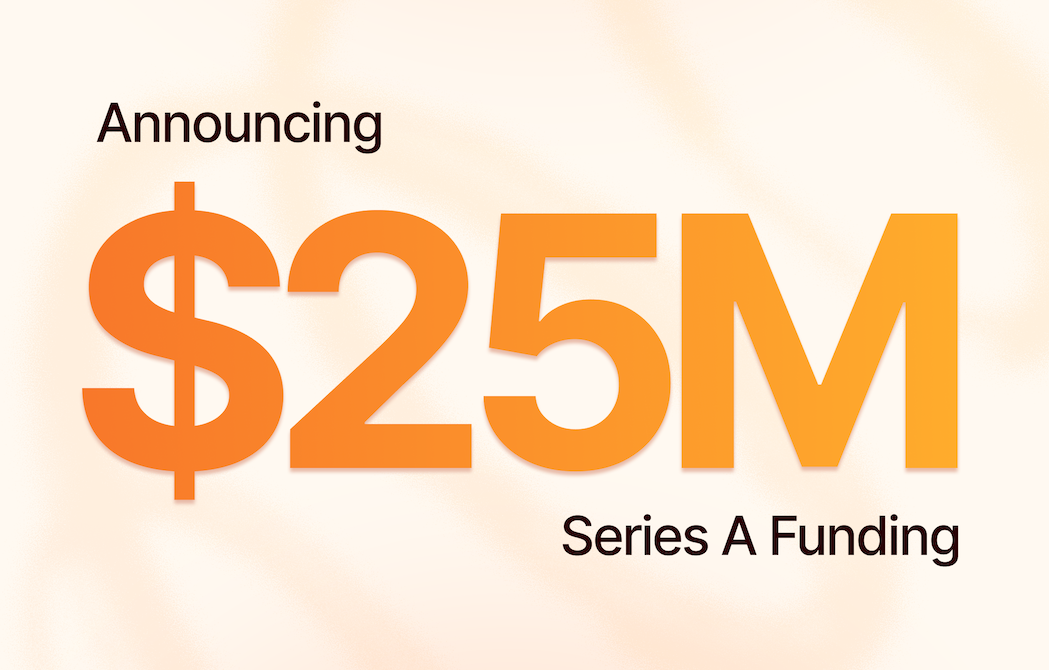
Slice Global Raises $25M Series A to Build AI-Native Infrastructure for Global Equity Management

We’re excited to share that Slice Global has raised $25M in Series A funding, led by Insight Partners, with continued support from TLV Partners, R-Squared Ventures, and Jibe Ventures.

Maor Levran

CEO

7
 min read
January 28, 2026
Table of contents
Share This Article

We’re excited to share that Slice Global has raised $25M in Series A funding, led by Insight Partners, with continued support from TLV Partners, R-Squared Ventures, and Jibe Ventures. This funding marks an important milestone for Slice, but more importantly, it reflects a broader shift in how modern companies are approaching equity, compliance, and global scale.

Equity Has Gone Global. The Infrastructure Has Not.

Companies today are global from inception. Teams are distributed. Employees move across borders. Yet equity operations remain stuck in a domestic, pre-AI era.

Finance, Legal, and HR teams have been forced to manually reconcile country-specific tax codes, securities laws, mobility events, and payroll obligations using spreadsheets, emails, and external counsel just to maintain baseline compliance. This not only slows operations, but magnifies the risk of exposure companies face when scaling internationally. 

At Slice, we believe equity management should match the modern reality of work: global, intelligent, and compliant by design. Our AI-native platform encodes jurisdictional logic directly into workflows, removing friction, reducing reliance on outside counsel, and giving teams the control and confidence they need to manage equity across borders, at scale.

Building AI-native, Compliance-first Equity Infrastructure

Slice is building the AI-native infrastructure for modern global equity management, designed to help companies operate equity across jurisdictions with speed, confidence, and compliance built in.

Unlike legacy tools that function as static systems of record and leave global complexity to manual processes, Slice embeds multi-jurisdiction tax and legal logic directly into workflows. Our platform can actively reason with the company, applying country-specific rules across the equity lifecycle while integrating deeply with finance, legal, HR, and payroll systems.

This approach allows global companies to:

  • Run cap tables, grants, exercises, and reporting from one unified system of record
  • Automatically apply country-specific tax treatment, reporting triggers, and withholding requirements
  • Coordinate approvals and execution across Finance, Legal, HR, and Payroll with full auditability and control
  • Prepare for liquidity events, secondary transactions, and proceeds distribution with confidence

For CFOs and finance teams, this translates into meaningful operating impact, including shorter equity ops cycles, reduced dependency on local counsel, and lower regulatory risk as organizations scale globally.

Why Now

The rise of distributed teams, cross-border hiring, and mobile workforces have fundamentally changed how companies operate. But the infrastructure for managing global equity has yet to keep pace. Slice is rebuilding global equity management to be AI-native and compliance-first, so companies can grant equity anywhere, to anyone, efficiently and in full compliance. As our customers scale across countries, we scale with them, continuously updating our compliance logic and workflows as regulations evolve.

What This Funding Enables

With this Series A, we will:

  • Deepen our AI-native compliance infrastructure
  • Expand product and engineering to support more jurisdictions and workflows
  • Scale go-to-market globally as more companies operate across borders from day one

We are grateful to Insight Partners for leading this round and for their conviction in the future we are building, and to TLV Partners, R-Squared Ventures, and Jibe Ventures for their continued partnership. Most of all, we are thankful to our customers and their teams who have trusted Slice as their system of record for equity management.

What’s Next

This funding gives us more fuel, but it does not change our focus. We will continue listening to our customers, building deeply technical infrastructure, and solving real operational problems at the intersection of equity, compliance, and global scale.

We are growing fast and hiring across teams, and we’re excited to keep building the new standard for global equity.

👉 Read the full press announcement here

In today's competitive tech landscape, attracting and retaining top talent across borders is crucial for startup success. For companies with a growing presence in Sweden, navigating the complexities of equity compensation can be a significant hurdle. This is where Qualified Employee Stock Options (QESOs) become critical. Although implementing QESOs involves navigating numerous requirements, the substantial tax advantages make them a highly rewarding solution for both companies and employees.

What are QESOs?

Qualified Employee Stock Options (QESOs) are a type of stock option specifically designed for companies with a Swedish presence to incentivize employees with equity in the company. The beauty of QESOs lies in their favorable tax treatment for both the company and the employee:

  • Employee Benefits: Employees enjoy tax-free grants and are only taxed on capital gains at upon sale, typically at a rate of 25%.
  • Company Benefits: Companies benefit from reduced social security contributions compared to traditional non-qualified stock options.

Difference Between QESOs and Non-Qualified Stock Options in Sweden

When considering stock options, it's essential to understand the differences between QESOs and non-qualified stock options in Sweden:

  • Tax Event: For non-qualified stock options, there is a tax event upon exercise. Employees are taxed at progresive tax rate ranging between 30%-55% on the difference between the market price and the exercise price at the time of exercise.
  • Withholding Obligation: Employers have a withholding obligation for non-qualified stock options. Employers must withhold the appropriate tax amount through salary in the month following the exercise.
  • Social Security Contributions: Non-qualified stock options include a social security contribution obligation at a rate of 31.42%.

Key Requirements for QESOs

To benefit from the generous tax rules associated with QESOs, several strict requirements must be met. Here are the ten essential criteria for companies, stock options, and option holders:

Qualifying Conditions for Companies

  1. Fewer than 150 employees.
  2. No more than SEK 280 million in net Sales or balance sheet total.
  3. The company’s operations must not be older than 10 years.
  4. The company must not primarily engage in asset management, banking, financing, insurance, coal or steel production, real estate trading, long-term rental, or services related to legal advice, accounting, or auditing (“excluded activities”) for 3 consecutive years before the grant.
  5. Company must not be traded on a public stock market.
  6. Company cannot be direcly or indirectly controlled by a governmental body.
  7. The company must not be in financial difficulties.
  8. Company cannot be purely a holding company, and must undertake trade operations

Qualifying Conditions for Employees

  1. Be an employee or board member of the granting company or any subsidiary.
  2. Work a minimum of 75% of their working hours for the granting company or any subsidiary.
  3. Must earn a minimum salary of 13 “income base amounts” during the vesting period of 3 years after the grant date. The income base amount in 2024 is SEK 76,200.
  4. Employee, together with closely related affiliates, cannot own more than 5% of the voting rights or share capital of the granting company.

Beyond QESOs: Comparative Analysis

If you're familiar with the UK's Enterprise Management Incentive (EMI) scheme, you'll find striking similarities between QESOs and EMIs. Both programs have similar conditions and are designed to optimize tax benefits and encourage employee ownership, making them highly attractive for startups and growing companies looking to incentivize their workforce.

However, there are key distinctions that set QESOs apart, providing unique advantages:

  • No Limit on Exercise Price: One of the most notable advantages of QESOs over EMIs is the absence of a cap on the exercise price. This means that employees can potentially benefit more from their options, as there are no restrictions on the price at which options can be exercised. This flexibility allows for greater potential for value creation, particularly in rapidly growing companies where share prices can increase significantly over time.
  • Enhanced Flexibility and Applicability: The absence of exercise price restrictions allows for more customized compensation packages, appealing to a broader range of businesses and making QESOs a more versatile option across various sectors and stages of development.

Slice's Approach to QESO Management

At Slice, we offer a comprehensive solution for managing QESOs for Swedish employees, ensuring a streamlined and efficient process from creation through sale. Here's how we can assist:

  • Value Alerts: We provide real-time alerts on the value of options upon grant, both for the company and the option holder. This ensures the company does not exceed the option value limitations. 
  • Exercise Period Management: Our platform tracks and manages exercise periods, ensuring timely notifications and helping option holders maximize their benefits within the allowed timeframe.
  • Scope of Work Conditions: We monitor and enforce the scope of work conditions, ensuring compliance with employment and work hour requirements for QESO This helps maintain eligibility for tax benefits and other advantages.
  • Relationship Management: Whether the option holder is an employee, board member, or has another type of relationship with the company, we ensure all relevant criteria and conditions are met and tracked accurately.

With Slice, managing QESOs becomes a seamless experience, allowing both companies and option holders to focus on growth and success.

Conclusion – Investing the Time to Grant QESOs in Sweden is Worth It!

Although granting QESOs in Sweden requires understanding the tax rules, company requirements, and employee conditions, the tax advantages it offers are significant. Investing time in implementing and managing QESOs is a worthwhile endeavor, enhancing employee compensation and driving growth.

Global Equity Made Safe

CONTACT US
BACK TO BLOG
Further reading

Product

Australian ESS Tax Rules for Stock-Based Compensation

Understand Australia's Employee Share Scheme (ESS) tax regime. Learn about taxing points, real risk of forfeiture, and compliance requirements for employee equity compensation.

Yarin Yom-Tov

Product Tax Manager

10
 min read
January 20, 2026

Product

Revolut’s Options CSOP Mishap & Impact on Employees

Discover how Revolut's equity compliance error turned tax-advantaged CSOP options into costly liabilities. Learn about post-termination exercise periods (PTEP), disqualifying events, and how automated compliance can prevent unexpected tax bills for employees

Daniel Penso

Product Manager

10
 min read
January 8, 2026

News

The Transparency Gap in Employee Equity Management

85% of employees want more equity education, yet only 34% find it effective. Learn how the Slice Global Employee App closes this gap with automated transparency.

Jason Mann

Advisor, CEP

8
 min read
December 11, 2025

Safeguard Your Equity Worldwide

Contact us